If you've ever browsed the menu of an Indian takeaway near me, you've probably come across both Balti and Karahi. At first glance, they can seem quite similar. Both are popular South Asian curries, both are cooked with fragrant spices, and both can be made with chicken, lamb, beef, prawns or vegetables. So, what exactly sets them apart?
Understanding how Balti differs from a Karahi goes beyond the ingredients. The two dishes have different histories, cooking methods, flavour profiles and even the pans they're cooked in. While they share roots in South Asian cuisine, Balti has become a British favourite with its own identity, whereas Karahi remains a traditional dish deeply connected to Northern India and Pakistan.
This distinction often leads to confusion, especially among people discovering Indian cuisine for the first time. It's also why comparisons such as balti vs karahi, the difference between balti and karahi, and even kadai chicken vs balti are commonly searched online.
Whether you're ordering a Friday night takeaway or exploring authentic South Asian curries for the first time, knowing the difference can help you choose a dish that suits your taste. Do you prefer a lighter, aromatic curry or something richer with bold spices? Both have plenty to offer, but each delivers a very different dining experience.
In this guide, we'll explore the origins of both dishes, compare their cooking styles, explain how their flavours differ and help you decide which one deserves a place on your next takeaway order.
What is a Balti?
A balti curry is one of Britain's best-known contributions to South Asian-inspired cuisine. Although its flavours are influenced by traditional cooking from Pakistan and Northern India, the dish as it's recognised today was developed in Birmingham during the late 20th century.
Its birthplace is the famous Balti Triangle, an area of Birmingham renowned for its vibrant South Asian restaurants. Local chefs adapted traditional recipes to suit British tastes, creating a curry that was quick to cook, packed with flavour and ideal for serving fresh.
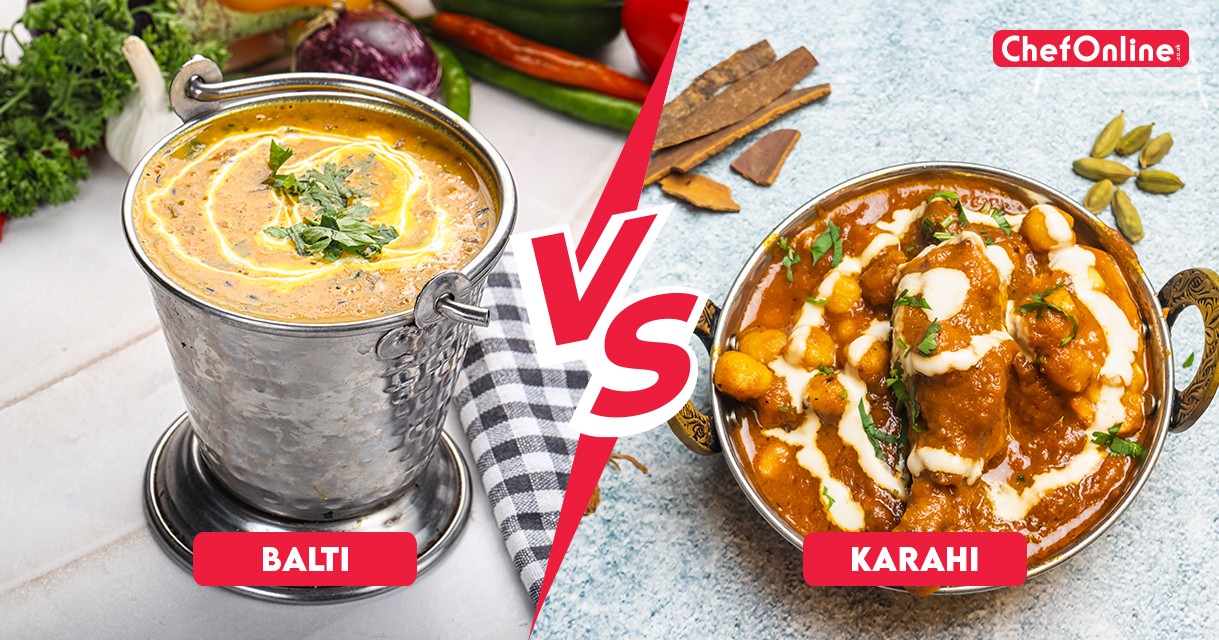
Unlike many slow-cooked curries, Balti is prepared over high heat in a thin, pressed-steel pan, also known as a balti bowl. The ingredients are quickly stir-fried, allowing the spices, onions, tomatoes and herbs to blend together while keeping the sauce relatively light and fresh.
One reason Balti became so popular across the UK is its approachable flavour. Rather than overwhelming heat, it focuses on aromatic spices, fresh coriander, garlic and ginger, producing a curry that's rich without being overly heavy. This makes it an excellent choice for anyone who enjoys flavourful food with a moderate level of spice.
Traditionally, the balti curry is served in the same steel dish it was cooked in, helping it retain its heat while giving the meal its distinctive presentation. It's commonly enjoyed with naan bread, which is perfect for scooping up the lighter, fragrant sauce.
Its combination of quick cooking, balanced spices and satisfying flavour has made Balti a firm favourite in Indian restaurants and takeaways throughout the UK.
What is a Karahi (Kadai)?
While Balti has become a British favourite, the karahi dish has a much longer history. Originating in Northern India and Pakistan, Karahi is a traditional recipe enjoyed for generations in homes, roadside cafés, and bustling street food stalls. It remains one of the most authentic and widely loved South Asian curries.
The name "Karahi" (or "Kadai" in many parts of India) comes from the cooking vessel itself—a deep, round-bottomed pan traditionally made from cast iron or heavy steel. Unlike a Balti pan, which is thinner and designed for quick cooking, a karahi retains heat for longer, making it ideal for slow simmering.
This slower cooking method is what gives Karahi its distinctive character. Fresh tomatoes, onions, garlic, ginger and whole spices are cooked down gradually until they form a rich, concentrated masala. Meat or vegetables are then simmered in this sauce, allowing the flavours to develop naturally and absorb the spices over time.
The result is a curry with a deeper, bolder flavour than many other dishes. Fresh green chillies, cracked black pepper, coriander and garam masala often play a starring role, creating a robust taste that spice lovers appreciate. Although recipes vary by region, Karahi is generally known for its thick sauce, visible pieces of tomato, and generous use of fresh herbs.
If you've ever wondered about kadai chicken vs balti, the cooking technique is one of the biggest differences. Kadai chicken develops its flavour through slow reduction, while Balti focuses on speed and freshness.
Karahi is traditionally paired with naan, tandoori roti or chapati, making it perfect for soaking up the rich masala. It's a comforting dish that reflects the authentic cooking traditions of South Asia and remains a staple in Indian and Pakistani restaurants across the UK.
Key Differences Between Balti and Karahi
Origins and Cultural Background
One of the biggest differences between Balti and Karahi is where they come from.
Balti is widely recognised as a British adaptation of South Asian cooking. It was popularised in Birmingham's Balti Triangle, where local chefs blended traditional flavours with faster cooking methods to suit the growing demand for takeaway meals.
Karahi, by contrast, has centuries of history in Northern India and Pakistan. It remains a classic home-cooked meal and a favourite in traditional restaurants throughout South Asia. Rather than being adapted for a different audience, it has stayed remarkably true to its culinary roots.
Cooking Method
How each dish is prepared strongly influences the final result.
Balti is cooked quickly over high heat in a thin steel pan. The fast stir-frying locks in freshness while creating a lighter sauce that's ideal for busy restaurant kitchens and takeaway service.
Karahi follows a slower process. Ingredients are simmered in a heavy pan, allowing the tomatoes, spices and meat to gradually develop deeper, richer flavours. This patience creates a more intense and satisfying curry.
Spice Profile and Taste
The difference between Balti and Karahi becomes even clearer when you taste them.
Balti offers a balanced combination of aromatic spices with a lighter heat. Ginger, garlic, coriander and tomatoes work together to produce a fresh, approachable curry that appeals to a wide range of diners.
Karahi delivers a bolder experience. Its reduced masala, fresh green chillies and generous seasoning create a richer, spicier dish with greater depth and complexity, making it a favourite for those who enjoy more traditional South Asian flavours.
Sauce Texture and Consistency
Another easy way to tell the difference between Balti and Karahi is by looking at the sauce.
A balti curry usually has a lighter, smoother gravy made with onions, tomatoes and aromatic spices. Because it's cooked quickly over high heat, the sauce stays fresh and slightly thinner, coating the meat or vegetables without feeling too heavy. It's ideal for scooping up with naan or enjoying with pilau rice.
A Karahi, on the other hand, has a much thicker masala. As the ingredients simmer, the tomatoes soften and reduce, creating a rich coating rather than a runny gravy. You'll often notice chunks of fresh tomato, sliced ginger, coriander and whole spices, giving the dish a rustic, homemade appearance.
Cooking and Serving Vessel
The pan used to cook each dish also plays an important role.
Balti is prepared in a thin, pressed-steel balti bowl with a flat base. Traditionally, the curry is served in the same dish it was cooked in, helping it stay hot while giving the meal its distinctive presentation.
Karahi is cooked in a deep, heavy, round-bottomed pan known as a karahi or kadai. Although some restaurants serve it in the cooking vessel, others transfer it to a serving dish before bringing it to the table.
Which One Should You Choose?
The choice between Balti and Karahi comes down to personal preference.
Choose a Balti if you enjoy lighter curries with fragrant spices and a smoother sauce. It's a great option for a midweek takeaway, family meal or anyone trying South Asian curries for the first time. Pair it with pilau rice, garlic naan or a fresh salad for a balanced meal.
Choose a Karahi if you prefer bold, authentic flavours and don't mind a little more spice. Its rich tomato-based masala makes it perfect for sharing with freshly baked naan or tandoori roti, especially when you're looking for a more traditional dining experience.
Of course, there isn't a wrong choice. Both dishes showcase the incredible diversity of South Asian cooking, offering different flavours while using many of the same quality ingredients.
Final Thoughts
So, how does Balti differ from a Karahi? Although both dishes are rooted in South Asian culinary traditions, they have evolved differently.
Balti is a British success story, inspired by South Asian flavours but adapted in Birmingham to create a quicker, lighter curry that has become a staple of UK Indian restaurants. Karahi, meanwhile, remains true to its traditional origins, delivering a richer, slower-cooked dish with bold spices and a thick, flavour-packed masala.
Whether you prefer the fresh, aromatic character of a Balti or the hearty depth of a Karahi, both deserve a place on every curry lover's list. The next time you're searching for an Indian takeaway near me, why not try one of each and discover your favourite for yourself?
Frequently Asked Questions
What is the main difference between Balti and Karahi?
Balti is a British-developed curry cooked quickly in a thin steel pan with a lighter sauce, while Karahi is a traditional South Asian dish slow-cooked in a heavy pan with a thicker, richer masala.
Is Balti spicier than Karahi?
Generally, no. Balti is usually milder and more aromatic, whereas Karahi has a bolder spice profile with deeper, more robust flavours.
Which is better with naan?
Both pair well with naan. Balti's lighter gravy is ideal for dipping, while Karahi's thick masala is perfect for scooping up with fresh naan or chapati.
Is Kadai chicken the same as Karahi chicken?
Yes. Kadai chicken and Karahi chicken are essentially the same dish. "Kadai" is the Hindi term, while "Karahi" is commonly used in Pakistan and parts of North India.
Which curry should I order if I'm new to Indian food?
If you're new to South Asian curries, Balti is often a great starting point thanks to its balanced spices and lighter flavour. If you enjoy richer, more traditional dishes, Karahi is an excellent choice.